
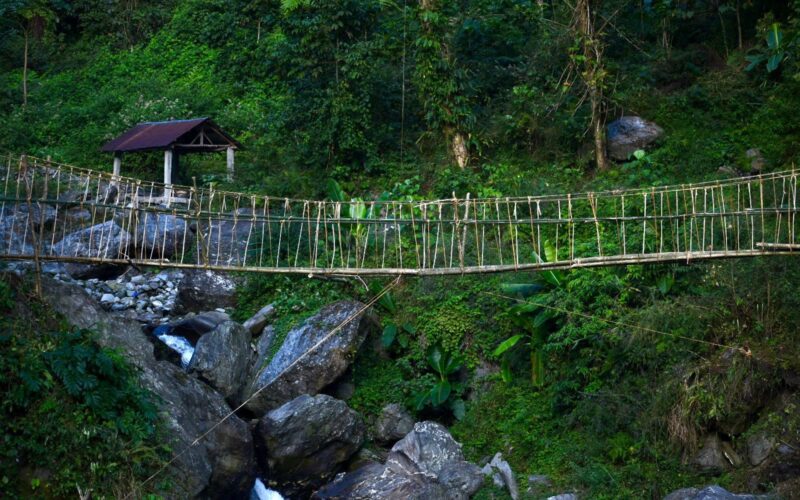
Celebrating the Lepcha Cane Bridge “Ru-Soam” — A Living Symbol of Indigenous Engineering
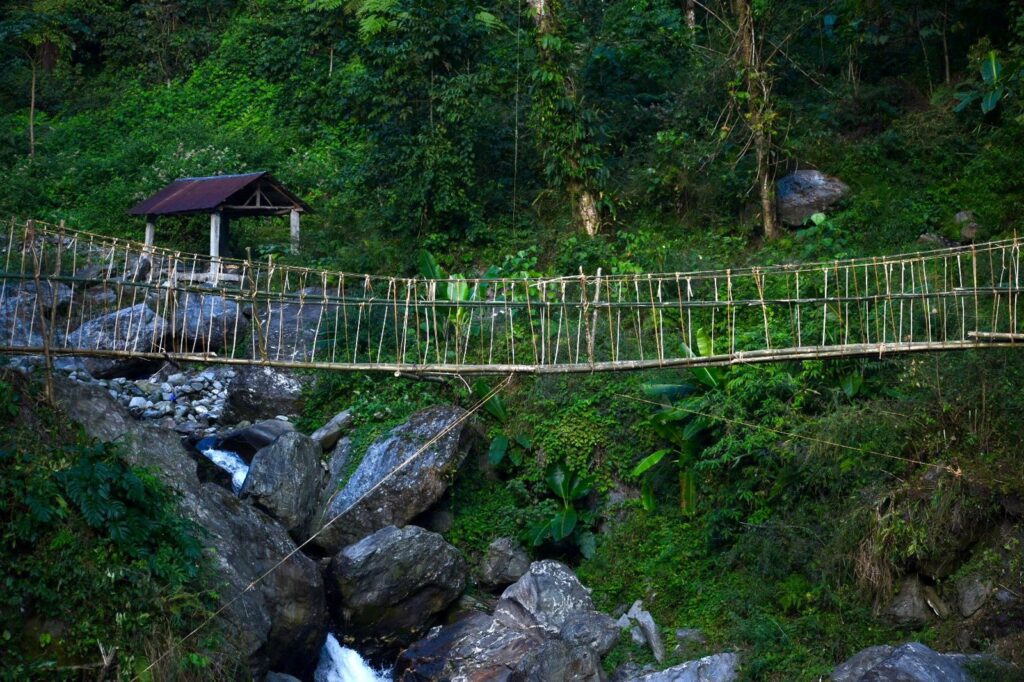
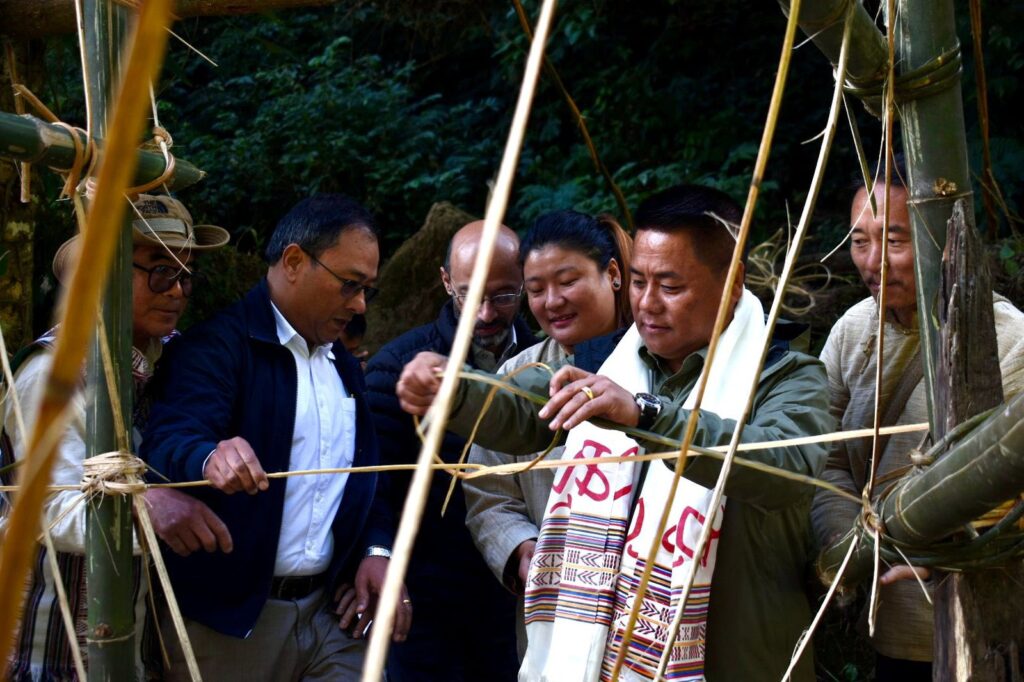
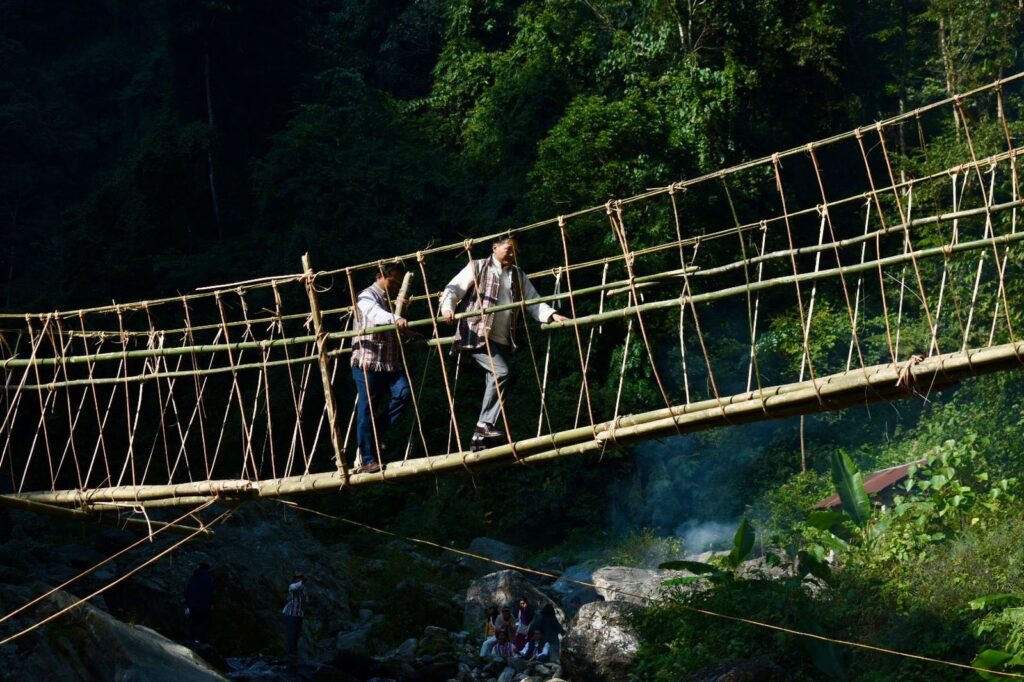
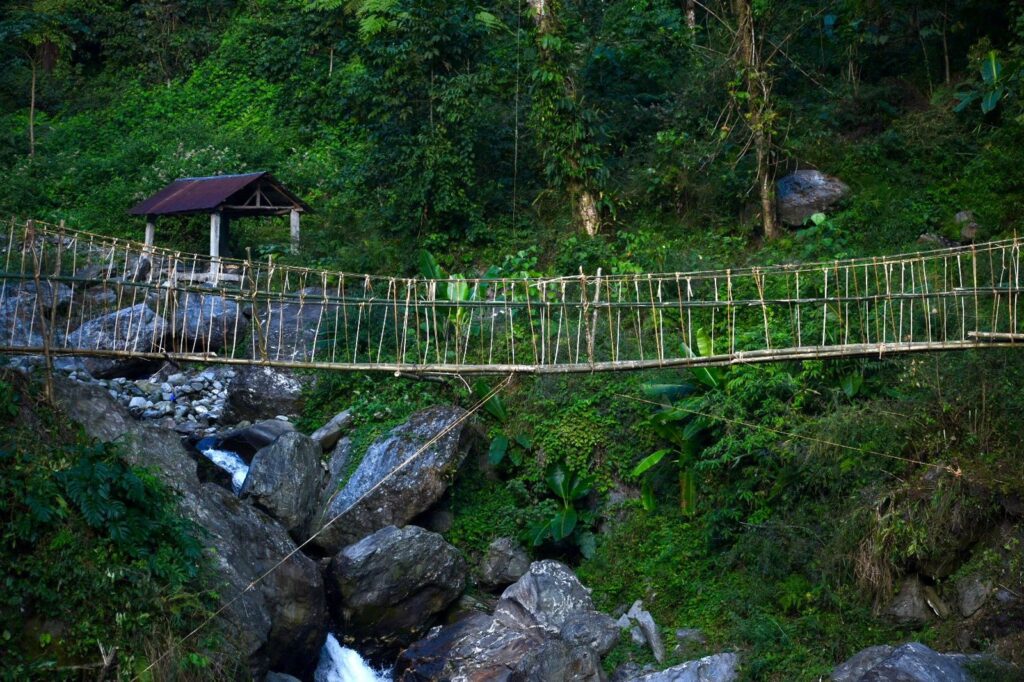
Mangan, November 15 : Within the sacred landscapes of Dzongu, where culture and nature continue to shape a distinct way of life, the Ru-Soam Bridge was inaugurated today. The bridge, located at Mani Kyong, Hee Gyathang was reconstructed using traditional Lepcha techniques and natural materials, the bridge stands as a compelling reminder of an indigenous engineering practice that has endured through generations.
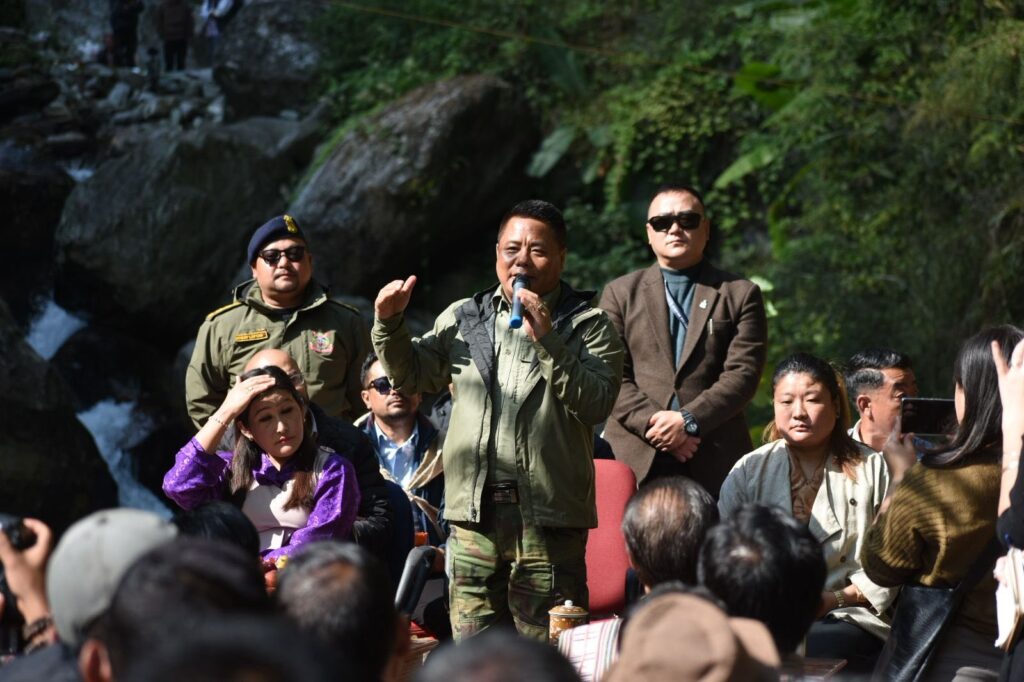
Minister, Science & Technology Department cum Area MLA, Mr Pintso Namgyal Lepcha, graced the occasion as the Chief Guest. He described the inauguration as a significant step in safeguarding the iconic Ru-Soam and highlighted the Department’s wider efforts in resilience-building, heritage preservation, and scientific problem-solving.
The Minister asserted that the Ru Soam situated in picturesque Lower Dzongu, will be a major tourist attraction in the coming days. He stated that the location is now blessed with three bridges built in three different eras, adding further charm to the destination.
He also congratulated the team responsible for securing the GI Tag for the traditional instruments Tumbok and Puntom Pulit. Mr Namgyal Lepcha and Mr Ugen Lepcha, who led the documentation work, were felicitated.
Earlier, Secretary, Science and Technology Department, Government of Sikkim, Mr Dhiren G Shrestha stated that the documentation of Ru-Soam is being undertaken by the Department’s Intellectual Property Rights section. He outlined the planning process and emphasised the importance of preserving technical authenticity. Master artisan Mr Dupden Lepcha and Filmmaker Mr Takzen Lepcha, who supported the documentation work, were felicitated.
The “Ru-Soam Initiative,” launched by Sikkim’s Department of Science & Technology, aims to revive, reconstruct, and document the traditional Lepcha cane bridges that embody the community’s deep harmony with their natural surroundings. The new bridge is built entirely with locally sourced materials and traditional methods, beginning with sacred rituals performed by Bongthings (Lepcha Shamans). The project places strong emphasis on intergenerational learning, with master craftsmen training younger artisans, while rigorous documentation through anthropological studies, video archiving, and scientific recordings ensures the knowledge is preserved for future generations.
This initiative is supported by the State’s collaboration with UNESCO, which is guiding the documentation to align with international heritage standards. The compiled material will be submitted to UNESCO for consideration under the Intangible Cultural Heritage framework. The initiative not only safeguards an important cultural identity but also showcases sustainable, low-carbon design relevant for climate resilience, strengthens disaster preparedness in remote areas, and opens pathways for eco-tourism, artisan empowerment, and renewed pride in traditional skills.
The inauguration reaffirmed the State Government’s commitment to protecting indigenous knowledge systems.
The programme also had the presence of Up-Adhakshya Ms Sonam Kipa Bhutia, Chairperson Horticulture Department Ms Ongkit Lepcha, Principal Secretary, Science and Technology, Dr Sandeep Tambe, Chief Engineer, Culture Department Mr Rimp Dorjee Lepcha, ADC Development Dr Sonam Rinchen Lepcha, SDM Dzongu Mr Gideon Lepcha, BDO Dzongu Dr. Mahindra Tamang, Assistant Scientific Officer Mr Rajdeep Gurung, Senior Consultant Ms Jenny Bentley, Zilla and Gram Panchayat members of Dzongu Constituency, stakeholders, other dignitaries and officials of the concerned line department.