
District-Level Awareness Initiative and Workshop on State and Central Government Schemes Conducted in Pakyong
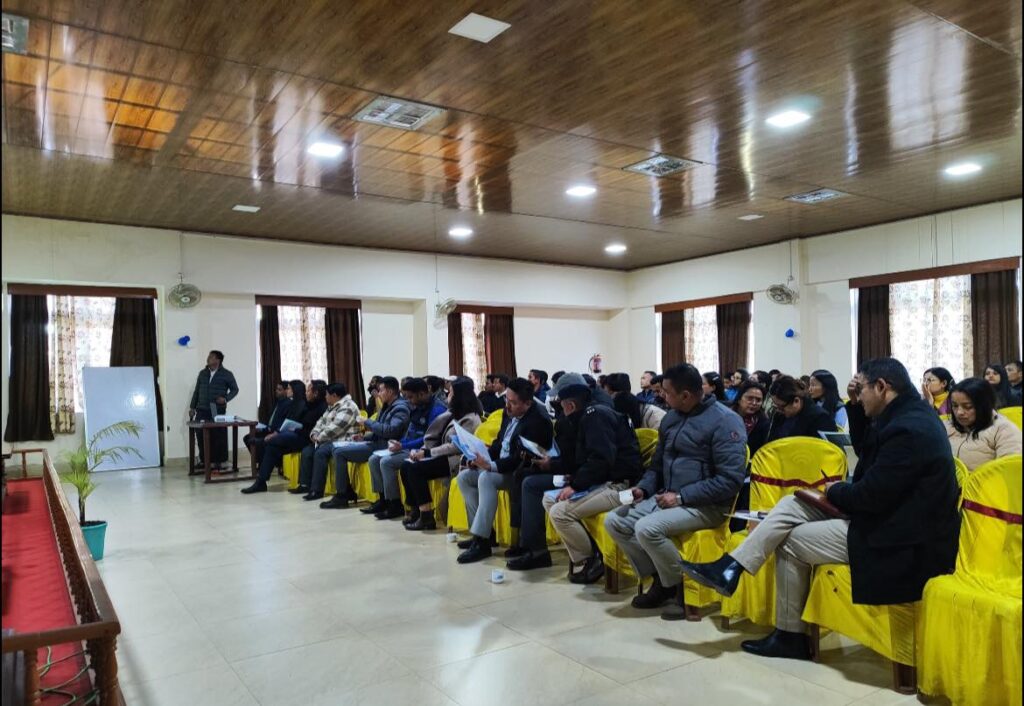
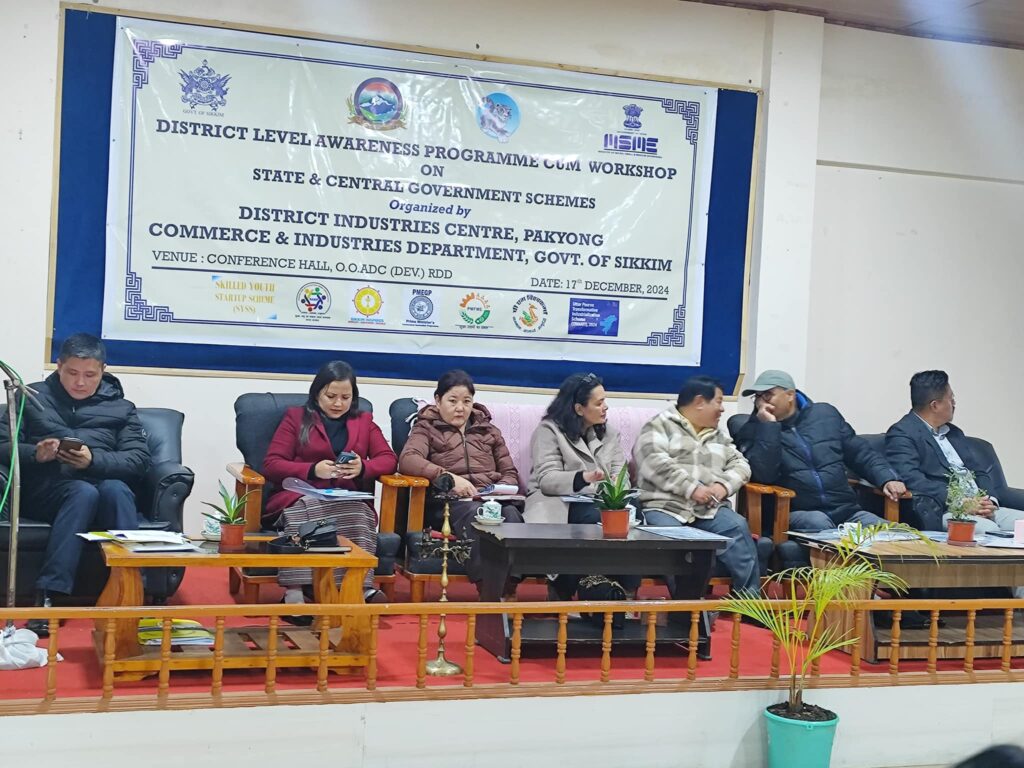
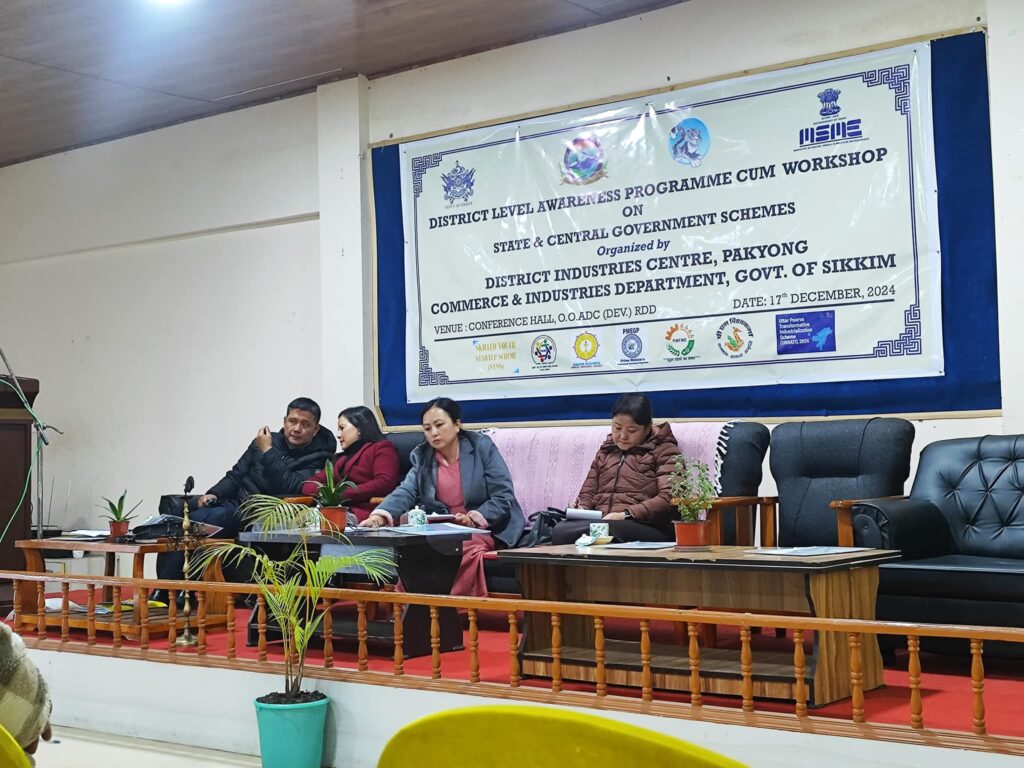
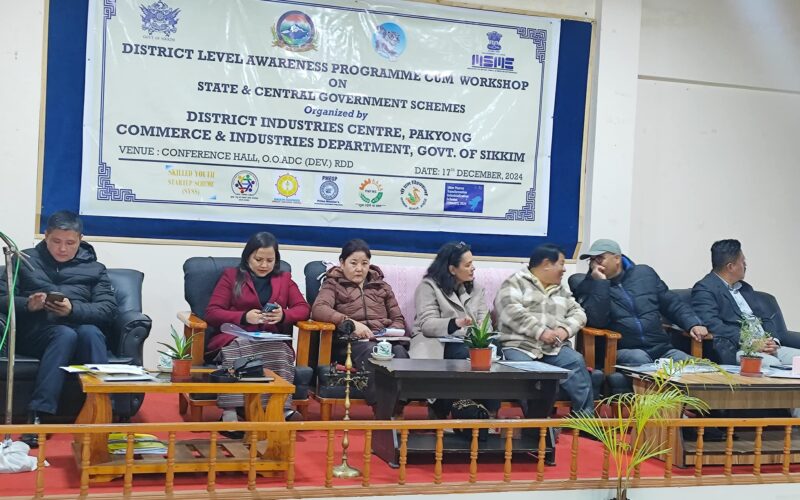
Pakyong, December 17 (IPR): A District-Level Awareness initiative and workshop focusing on State and Central Government schemes was convened by the District Industries Centre (DIC), Pakyong, under the Commerce and Industries Department at the RDD Community Complex, RURBAN Pakyong, today.
The event was graced by the presence of Mrs Pamin Lepcha, Advisor to the Social Welfare and Women and Child Welfare Department and MLA Gnathang Machong, who served as the chief guest. Also in attendance were Mrs Laden Lamu Bhutia, Zilla Adhyaksha; Mrs Prabha Pradhan, Zilla Upadhyaksha Pakyong District; Mr Thendup Lepcha, SDM (HQ); along with various heads of office within the district.
The workshop aimed to enhance awareness regarding the diverse state and central government schemes instituted by the department to foster industrial development, entrepreneurship, and self-employment.
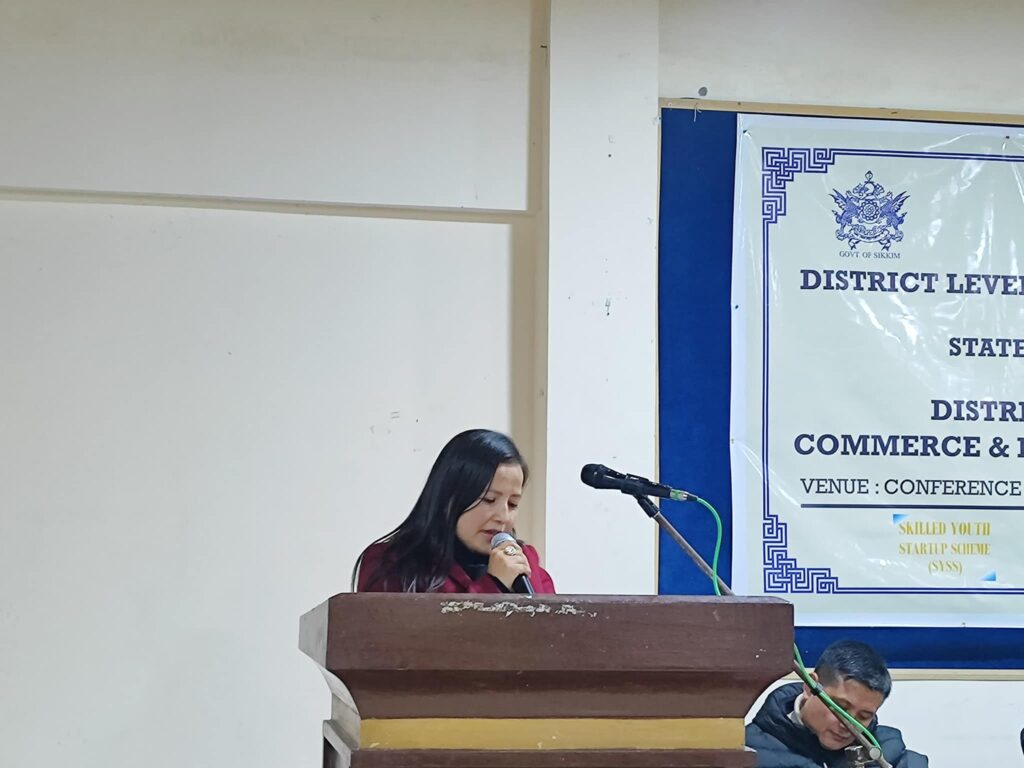
During the session, the Zilla Upadhyaksha underscored the significance of awareness programmes in enlightening the public and urged departmental heads to effectively disseminate information about these schemes at all levels. She advocated for collaborative efforts to position the district as a model for other regions and emphasised the necessity of widespread public awareness and training programmes to facilitate meaningful change. By highlighting the significance of MSME schemes, she encouraged the promotion of skill development to empower individuals towards self-sufficiency, thereby contributing to the district’s advancement.
Mr Jigmi Wangdi, GM of DIC Pakyong, provided an overview of the Uttar Poorva Transformative Industrialisation Scheme (UNNATI)-2024, which is designed to stimulate industrial growth, enhance infrastructure, improve skill sets, and promote entrepreneurship in the northeastern states. He elaborated on the scheme’s incentives component, the guidelines for incentive claims, requisite registration documents, and activities encompassed within the scheme. Additionally, he shared success stories to illustrate the scheme’s effectiveness.
Similarly, Mr Bijay Chettri, PMFME Coordinator, delivered a presentation regarding the Prime Minister Formalisation of Micro Food Processing Enterprises (PMFME) scheme. This initiative extends financial, technical, and business support for the establishment and upgrading of micro food processing enterprises nationwide, aiming to improve product quality, enhance operational capacity, and facilitate better market access.
Mr Chettri also discussed the application process, eligibility requirements, necessary documentation, and training opportunities, along with a success story to exemplify the scheme’s impact. Furthermore, he highlighted Sikkim’s involvement in the One District One Product (ODOP) initiative under the PMFME scheme.
Mr Manas Pratam Das, Team Leader SLPMU, provided insights into the PM Vishwakarma Scheme, which aids artisans and craftspeople engaged in 18 traditional trades. He detailed the various benefits of the scheme, such as financial assistance and skill development opportunities, while also emphasising the training centres established in Sikkim to enhance local artisans’ skill sets.
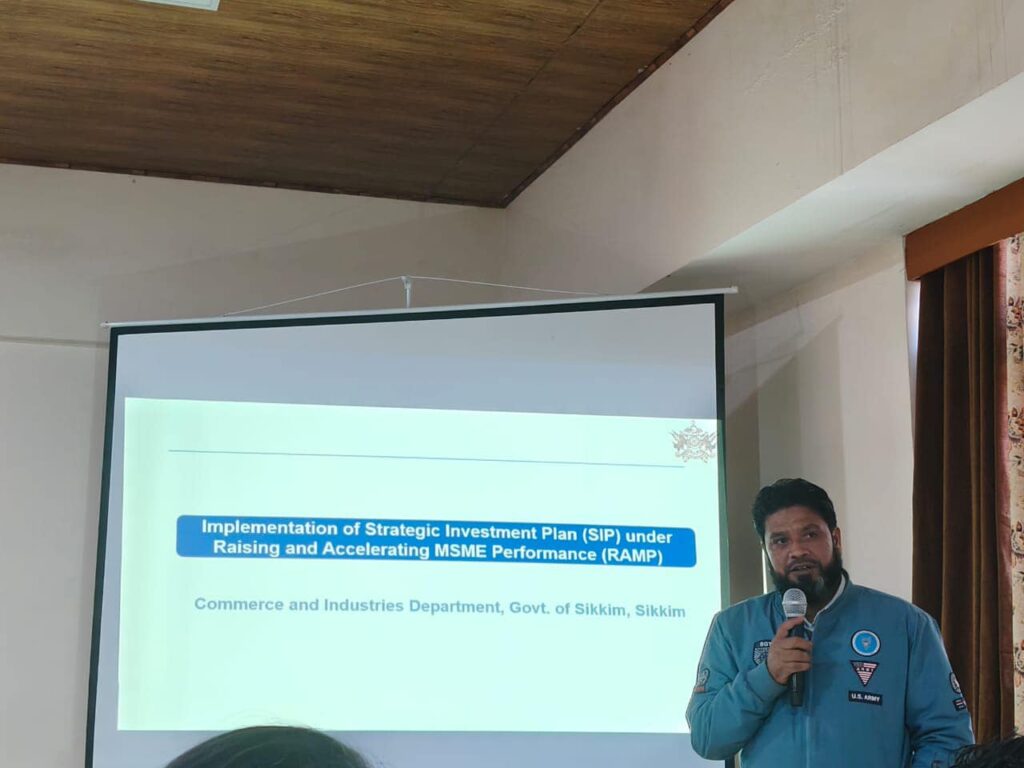
Likewise, Mr Jiaul Chaudhary, Capacity Building Expert of SPIU, RAMP, delivered a presentation on the Raising and Accelerating MSME Performance (RAMP) scheme, focusing on its objectives and key features, particularly the implementation of the Strategic Investment Plan (SIP) with an emphasis on approved interventions for Sikkim.
Mrs Pravina Pradhan, Inspector at DIC Gangtok, presented on the Prime Minister’s Employment Generation Programme (PMEGP), a central initiative administered by the Ministry of Micro, Small, and Medium Enterprises (MSME), Government of India. This credit-linked subsidy scheme aims to furnish financial assistance for the creation of self-employment opportunities in both rural and urban domains.
Furthermore, Mr CM Chettri, Inspector at DIC Pakyong, provided an overview of the Skilled Youth Start-Up Scheme (SYSS), which aims to empower unemployed youth in Sikkim by offering financial assistance and support for business ventures. He discussed the eligibility criteria, key activities, and application process pertaining to the scheme.
The programme concluded with an open discussion, during which the resource personnel addressed participants’ enquiries.